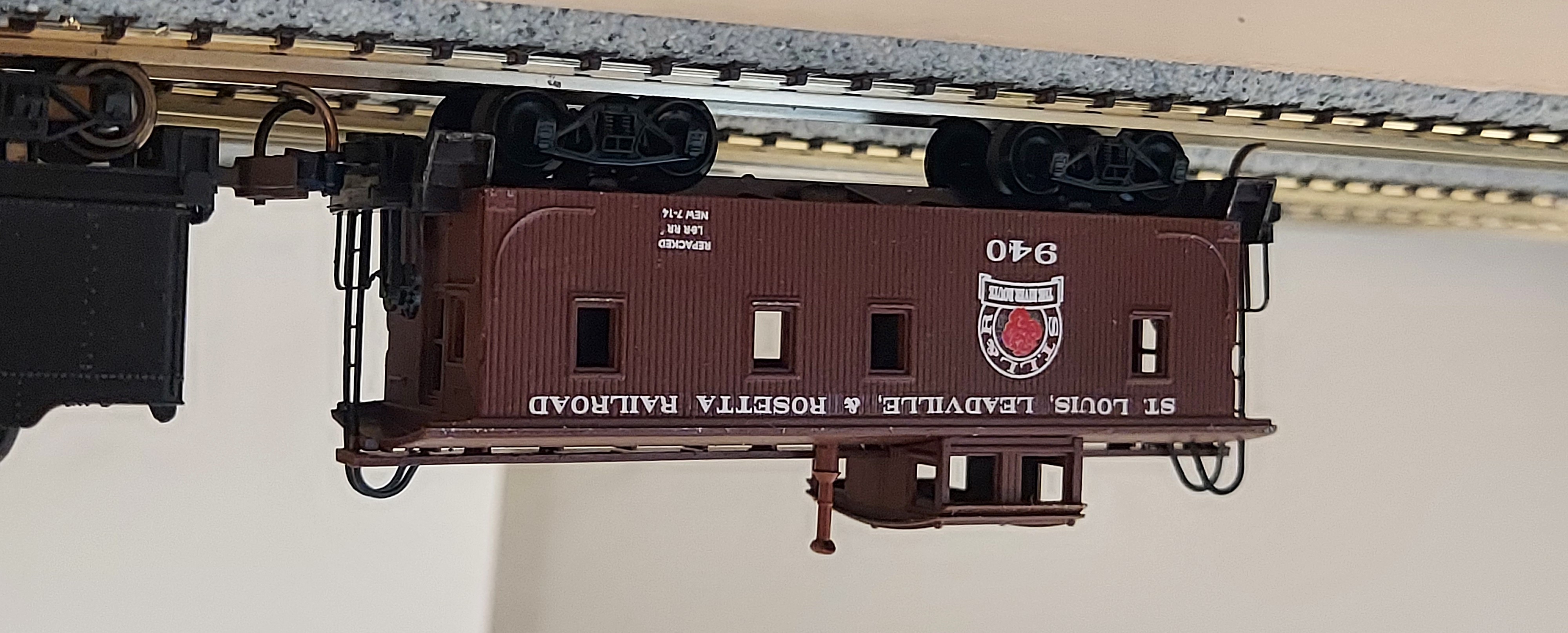
Home of the St. Louis, Leadville, & Rosetta Railroad, my model railroad layout project.
Site Updated August 1, 2026
Latest blog post: July 29, 2026
Welcome to the home of the Rosetta Railroad! This site is centered around the St. Louis, Leadville, and Rosetta Railroad, a freelance shortline in Southeast Missouri that I created. I'm currently building it as a modular model railroad using the Free-Trak standard. You'll find all sorts of things here. If you like small layouts, I have several track plans with more always in development, as well as progress on my micro-layout, Piper Junction. I also have the blog updated when I get to it. As well, I have many notes on my layout development. If you want to leave a friendly note, see my guestbook on the contact page.
Developing my philosophy as I grow as a model builder, I am finding how much I enjoy small layouts. My goals have shifted to accomodate. Instead of representing the Rosetta Railroad in a traditional basement-empire layout, or even a more modest around-the-room layout, I've decided that smaller piecemeal modular layouts, designed to bridge together, are more my speed. Each one can be a standalone layout, but together they all make up the Rosetta Railroad.
I've settled on the Free-Trak standard by Uncommon Models for my railroad. Free-moN and T-Trak are rather influential in my thought process as I build. I am part of my local T-Trak club, the Mississippi Valley N Scalers, and like how accessible building a T-Trak module can be and how easy the setup and display is using folding tables. Unitrack is just fun, too! As well, I like how Free-moN lets me play with space and arrangement, and thinks about railroading in realistic terms with operations as the focus. I hope to be an ambassador for Free-Trak as a way to bridge the gap between the ease of T-Trak and the operating interest of Free-moN!
Thank you for visiting my site, and I hope you'll continue to join me in my model railroading journey! My whole railroading journey so far is available to you to browse in the top bar. If you like what you see, connect with me or browse the work of those who inspired me on my Contact page!