Home of the St. Louis, Leadville, & Rosetta Railroad, my model railroad layout project.
Personal and layout updates. Notes about my research, building the website, and other fun stuff.
July 29, 2026
So the St. Louis Rail Prototype Modelers meet was the coolest thing ever.
You know how having a deadline can light a fire under you? My friend over at the QUEST Western Railroad encouraged me to bring something to display at the RPM. Never one to understate anything, I decided I was going to bring the entirety of the Fredericktown module, fully operational.
This meant I needed a bit of scenery. The beige board just looks unpleasant to the eye. So I set to work, and within the next few weeks I had some temporary scenery.
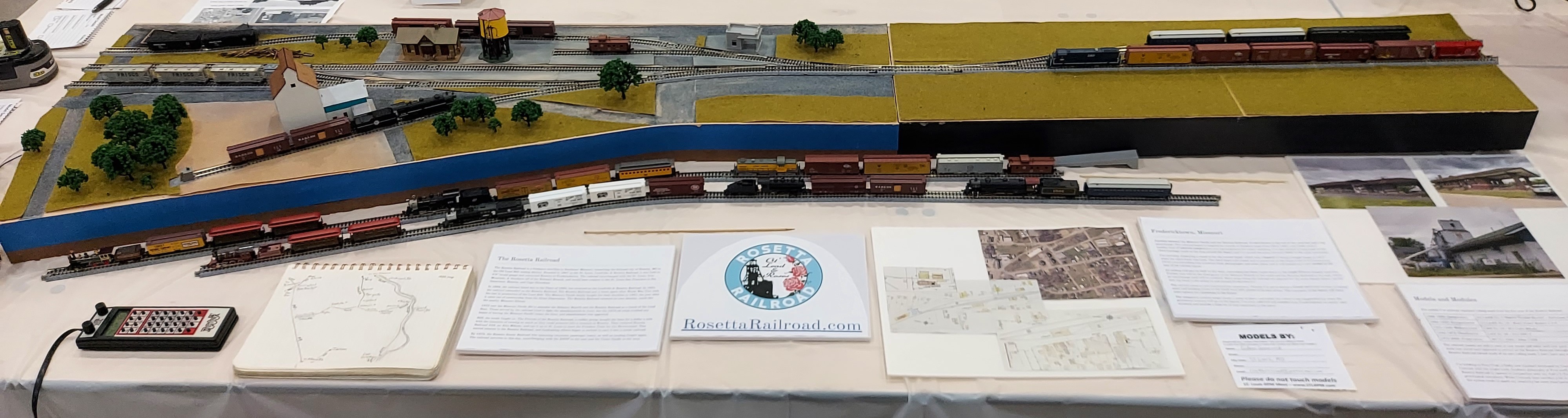
Quite the display! I even brought prototype pictures and Sanborn maps, and a couple of little write-ups. The display wasn't perfect, but it got the point across.
Since I didn't have my key structure, the Fredericktown depot, ready yet, I brought a half-finished version of the grain elevator and feed store. These are kitbashed from Miata Mike's grain elevator and ice house.
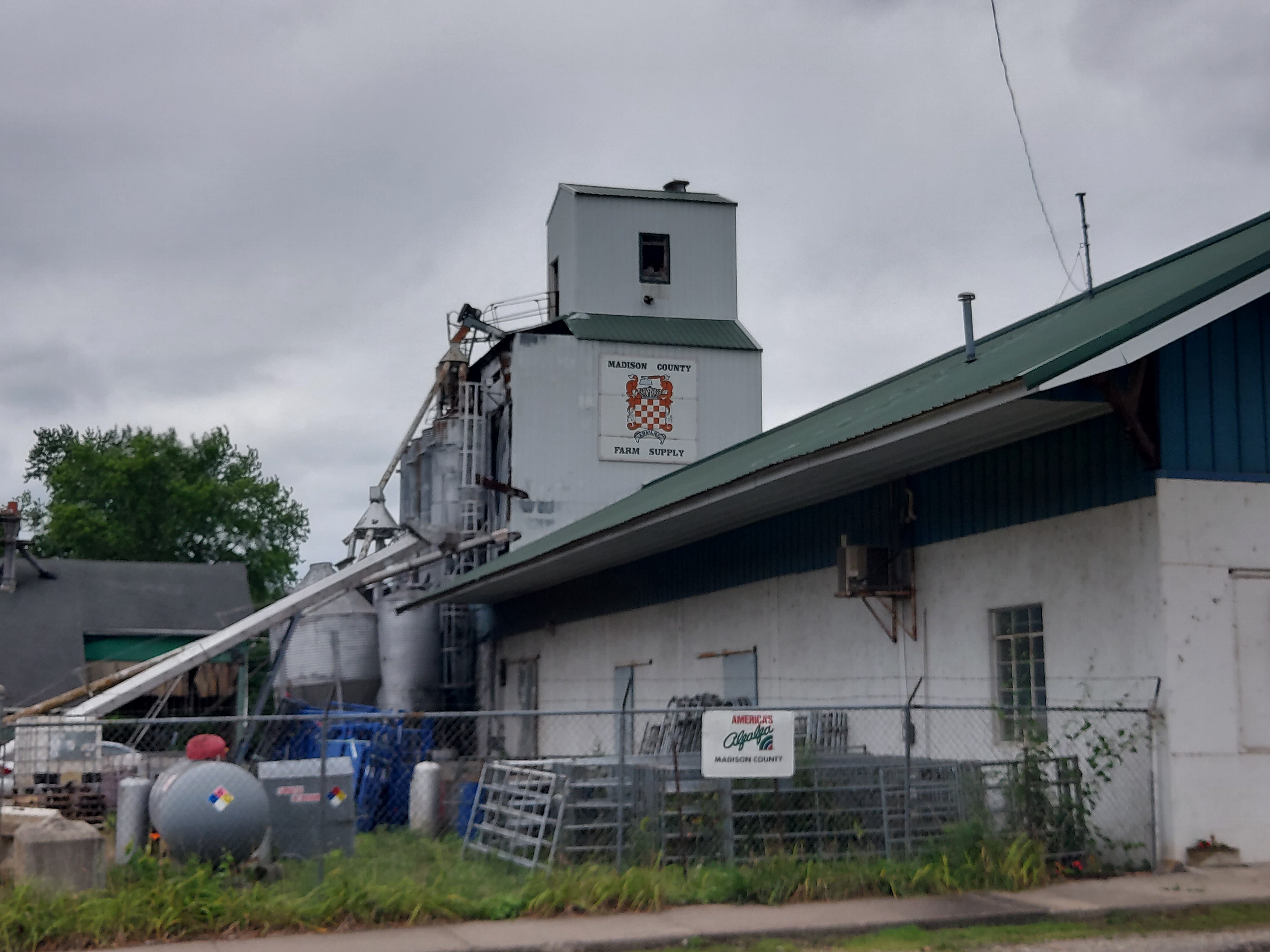
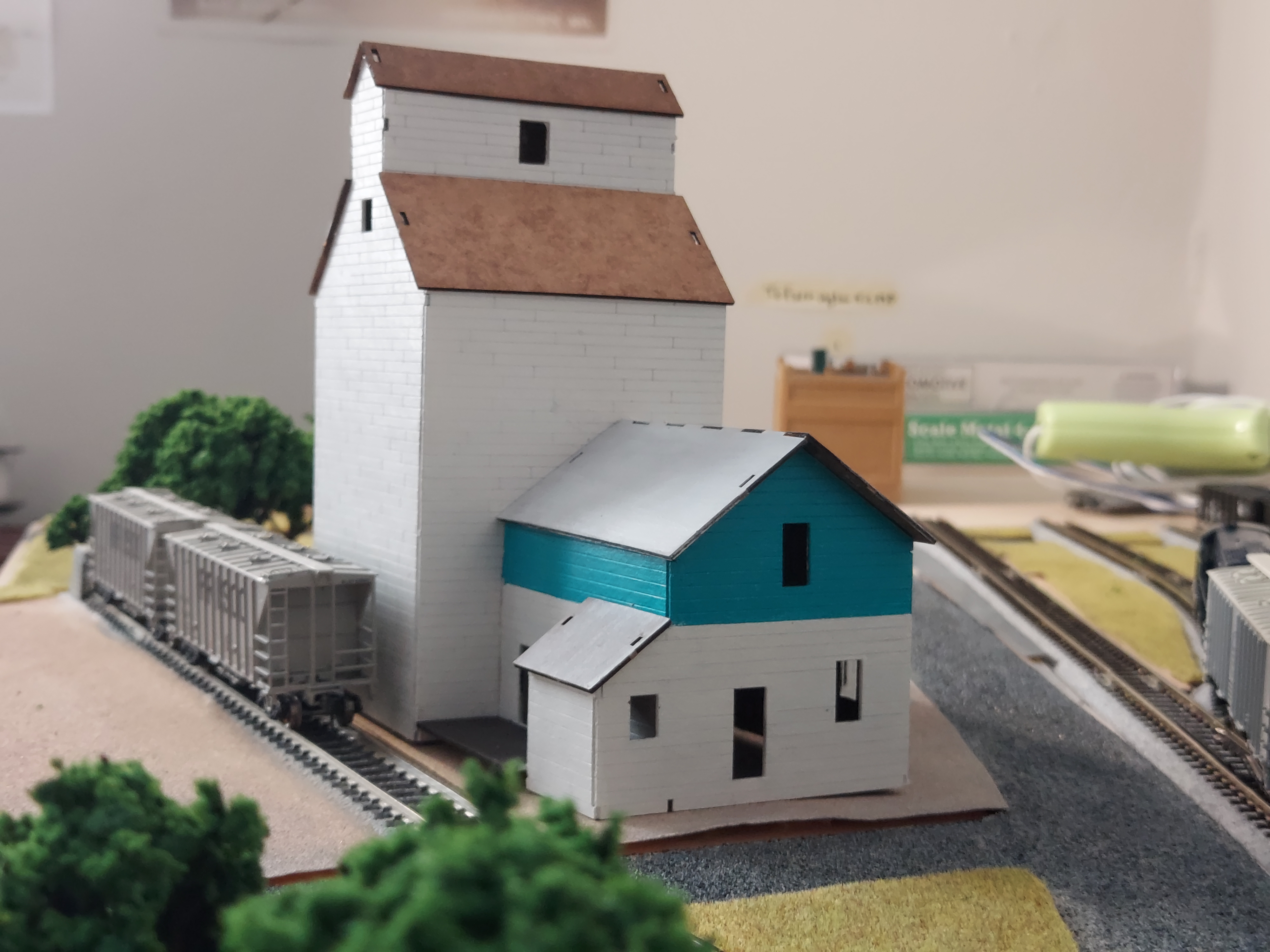
Not a 1-to-1 recreation, but definitely gets the point across.
Truly, though, the best part was the people. Talking with fellow modelers whose skill and dedication to the art was inspiring. Everyone in this hobby has something to add and learn from, and I loved hearing their stories play out through their model railroading journeys. I'm so proud to be part of this community.
The decals I designed with the help of NScaleTrainBoy of the BCCS arrived a little too late for the RPM, but they sure came out great.
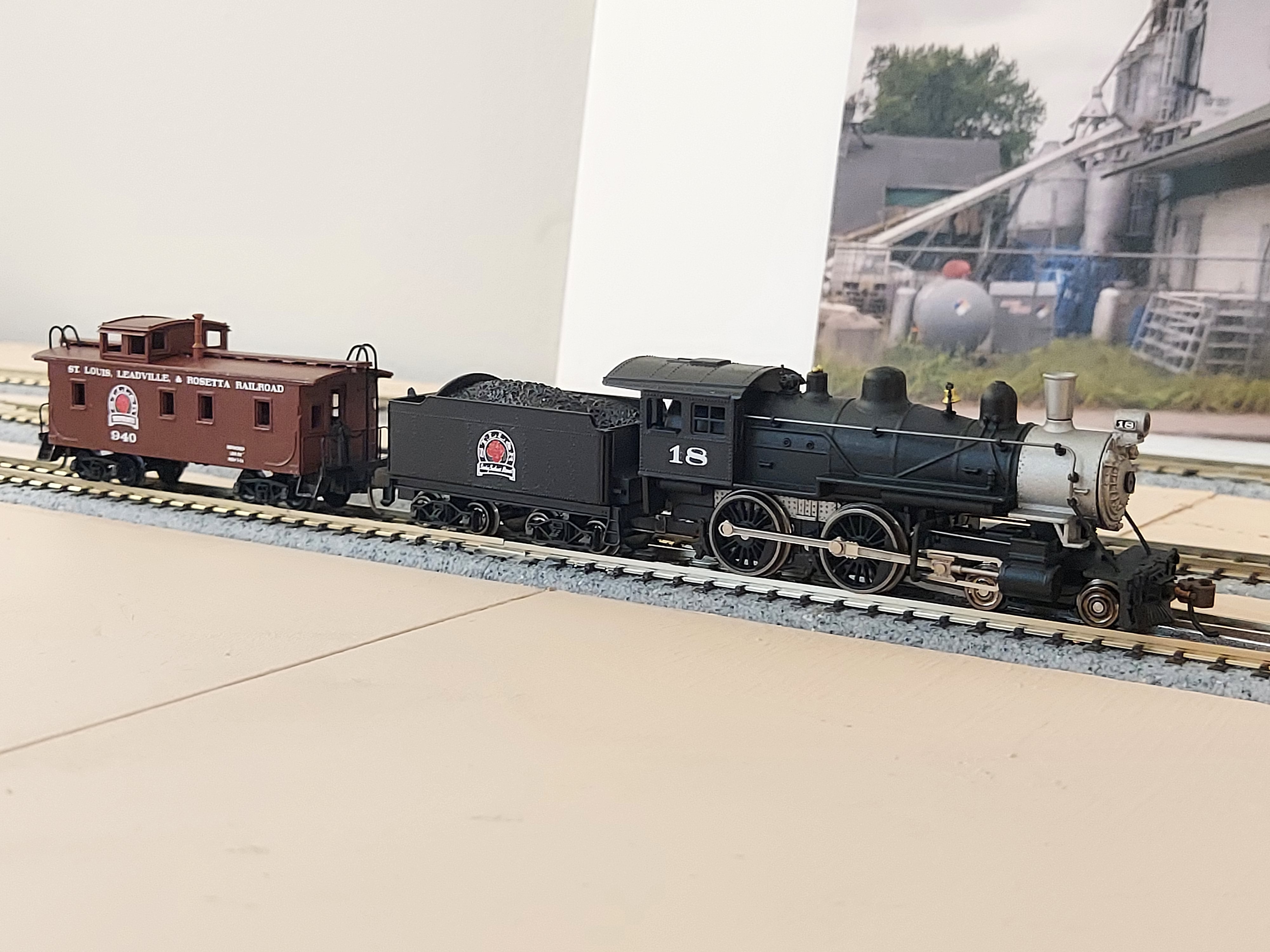
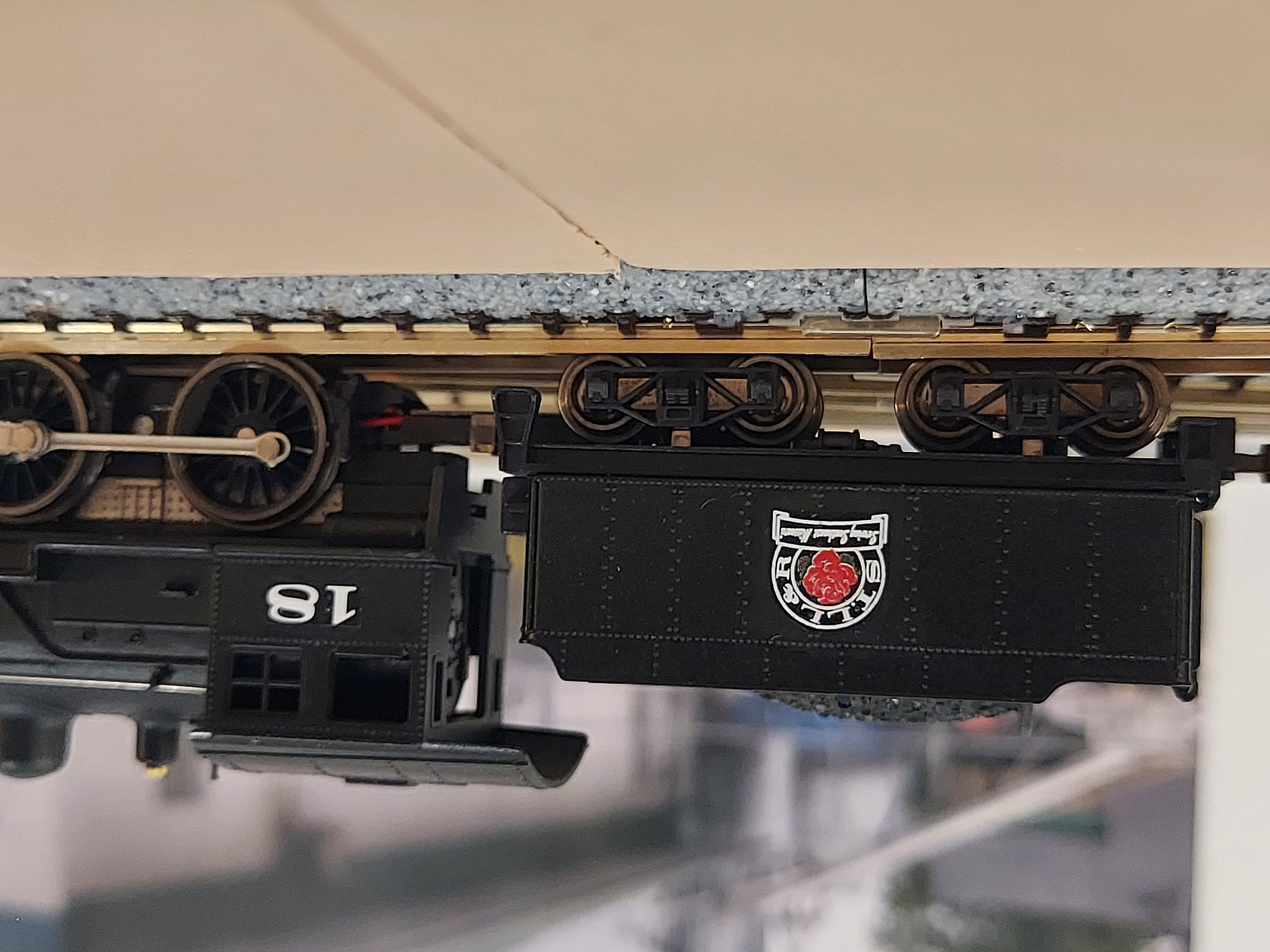
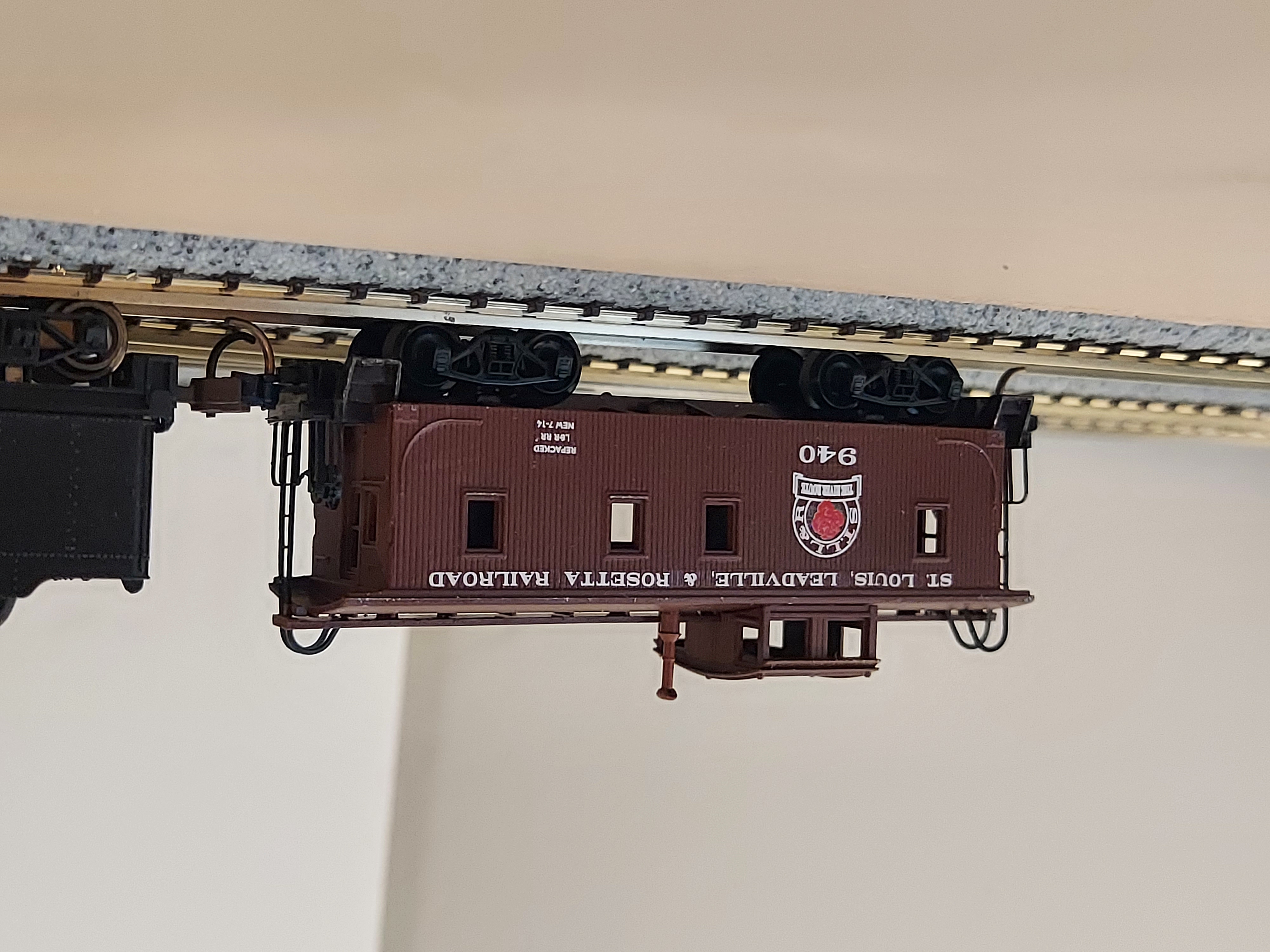
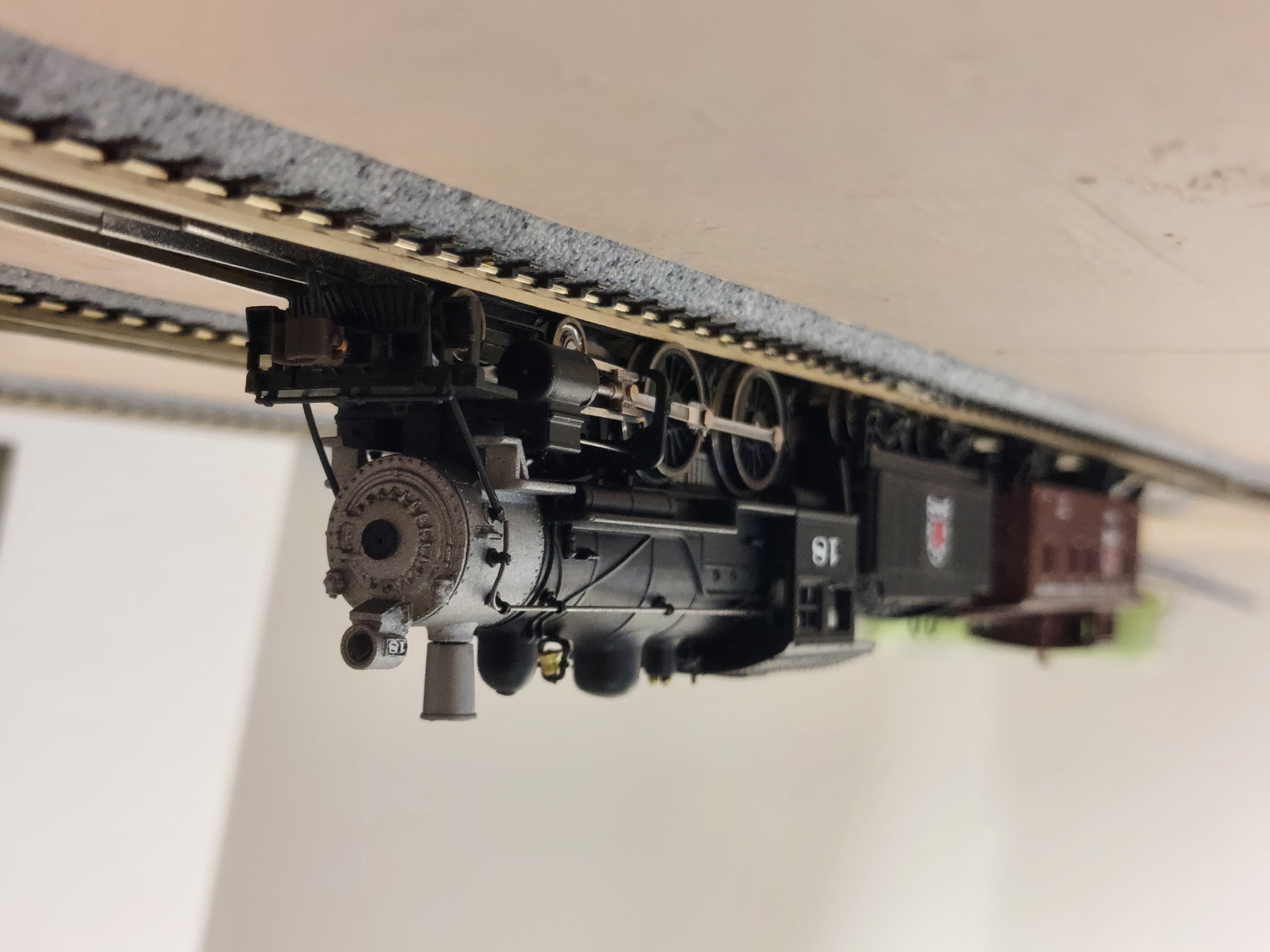
This feels big. The Rosetta Railroad has rolling stock. It feels real now.
See more photos in the Summer 2026 Gallery.
More to come, see you in the next post.
June 17, 2026
Note: This post was queued up but never posted. I kept the date written, but it was uploaded on July 29th.
I have a functioning layout!
A lot has happened since the April update, but I wanted to hammer out a more philosophical post before I got into the day-to-day.
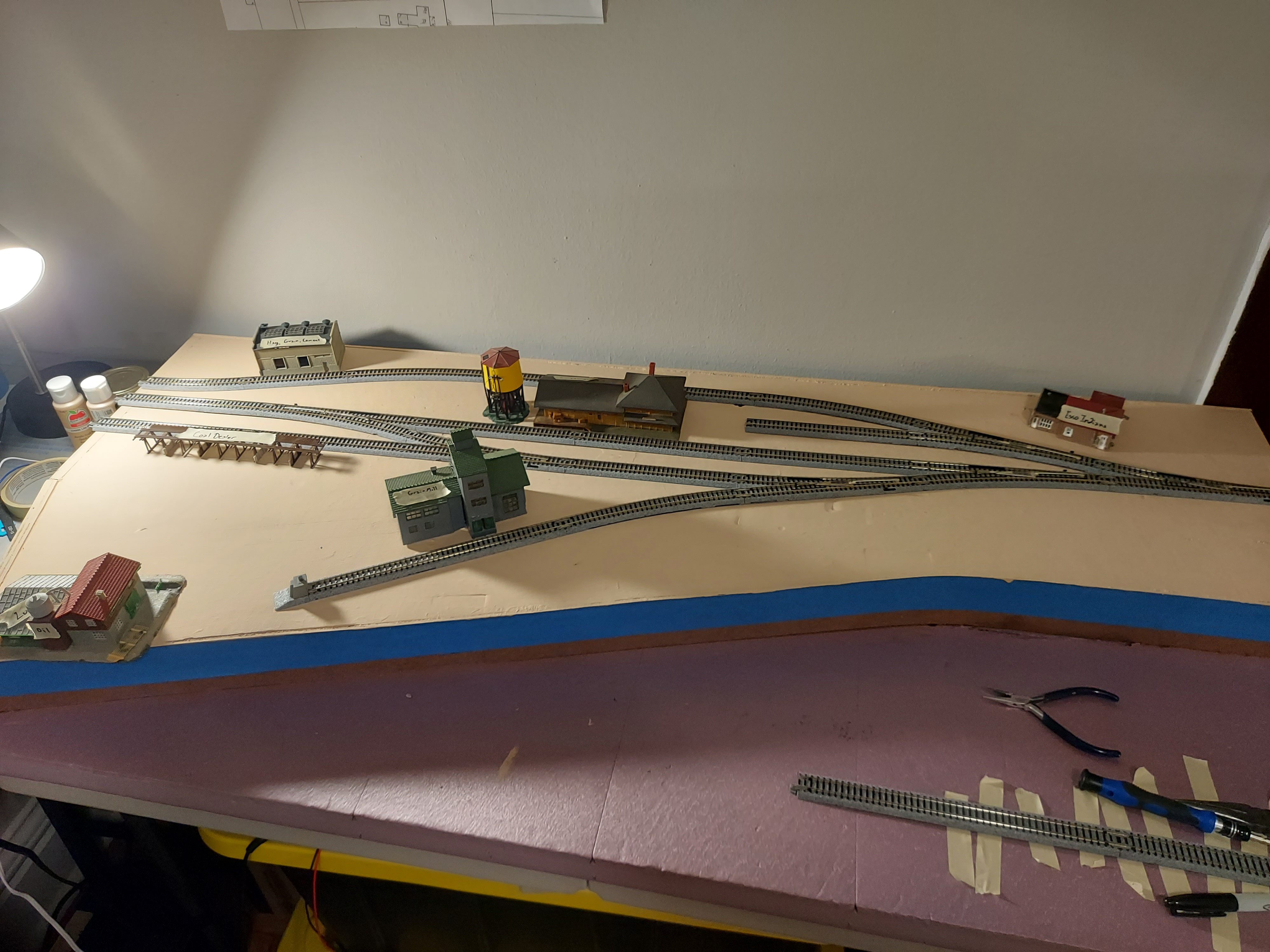
The Rosetta Railroad has been brought to life for the first time. However, I've shelved the plan to build Leadville for now; the grades were proving to be a challenge in the small space, and I wanted to learn more about the lead industry.
I finally settled on building the Rosetta Railroad to the Free-Trak standard. Kato Unitrack has proven to be fun and robust, and it's more affordable than I initially had thought. With that, I've built, wired, laid track on, and tested Fredericktown, MO, the western terminus of the Rosetta Railroad and the interchange with the Belmont Branch of the St. Louis, Iron Mountain, and Southern/Missouri Pacific.
For research, I finally visited Fredericktown and got to see the depot. It was built in 1917 and served until they closed the Belmont Branch in 1972, and now it's a very good restaurant (go on a Sunday for brunch and get the railroad porkchops with pullman potatoes). It was surprisingly emotional, knowing this was as close as I'd ever get to the real Rosetta Railroad.
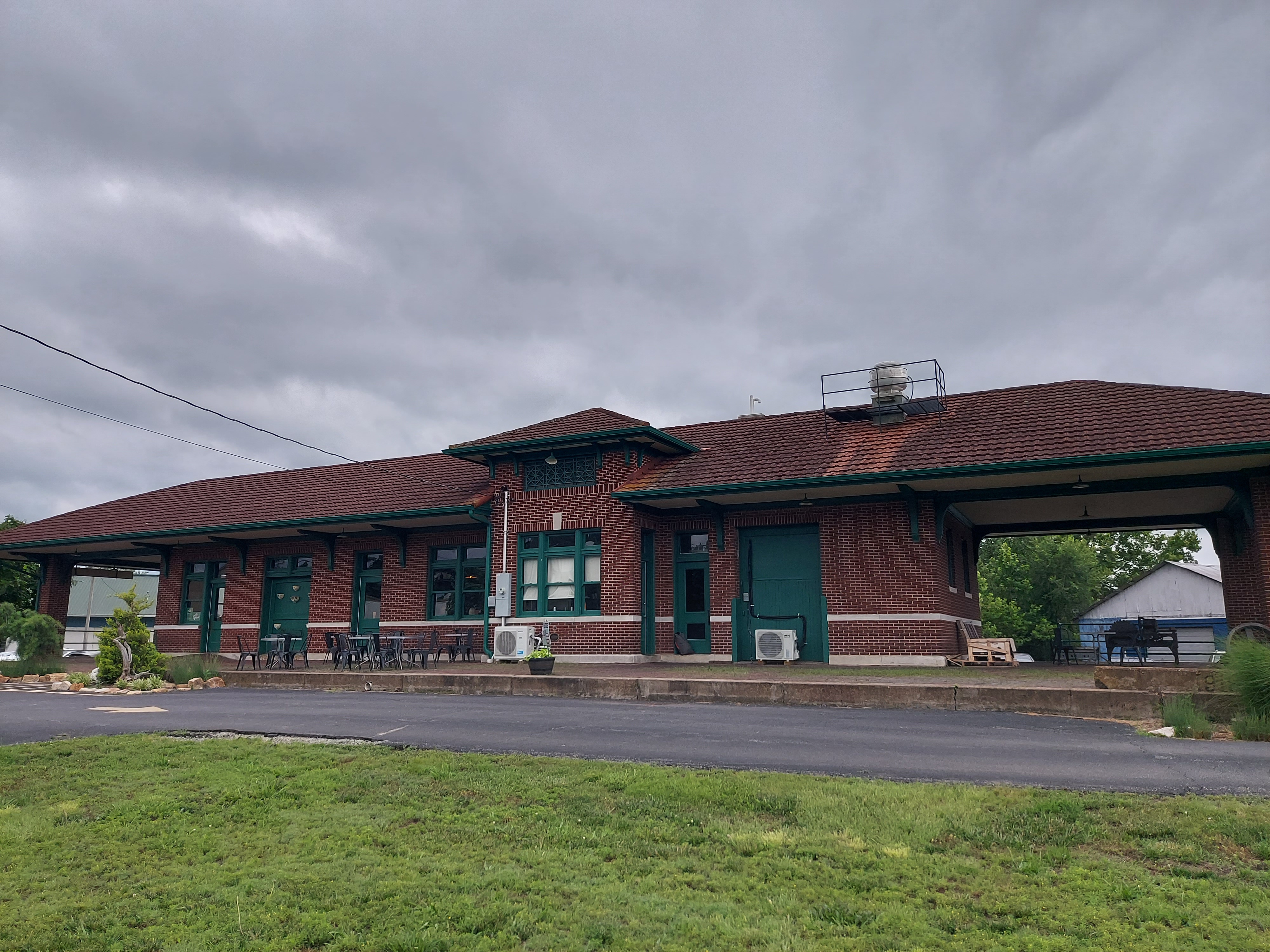
The depot will be a near-future scratch build project.
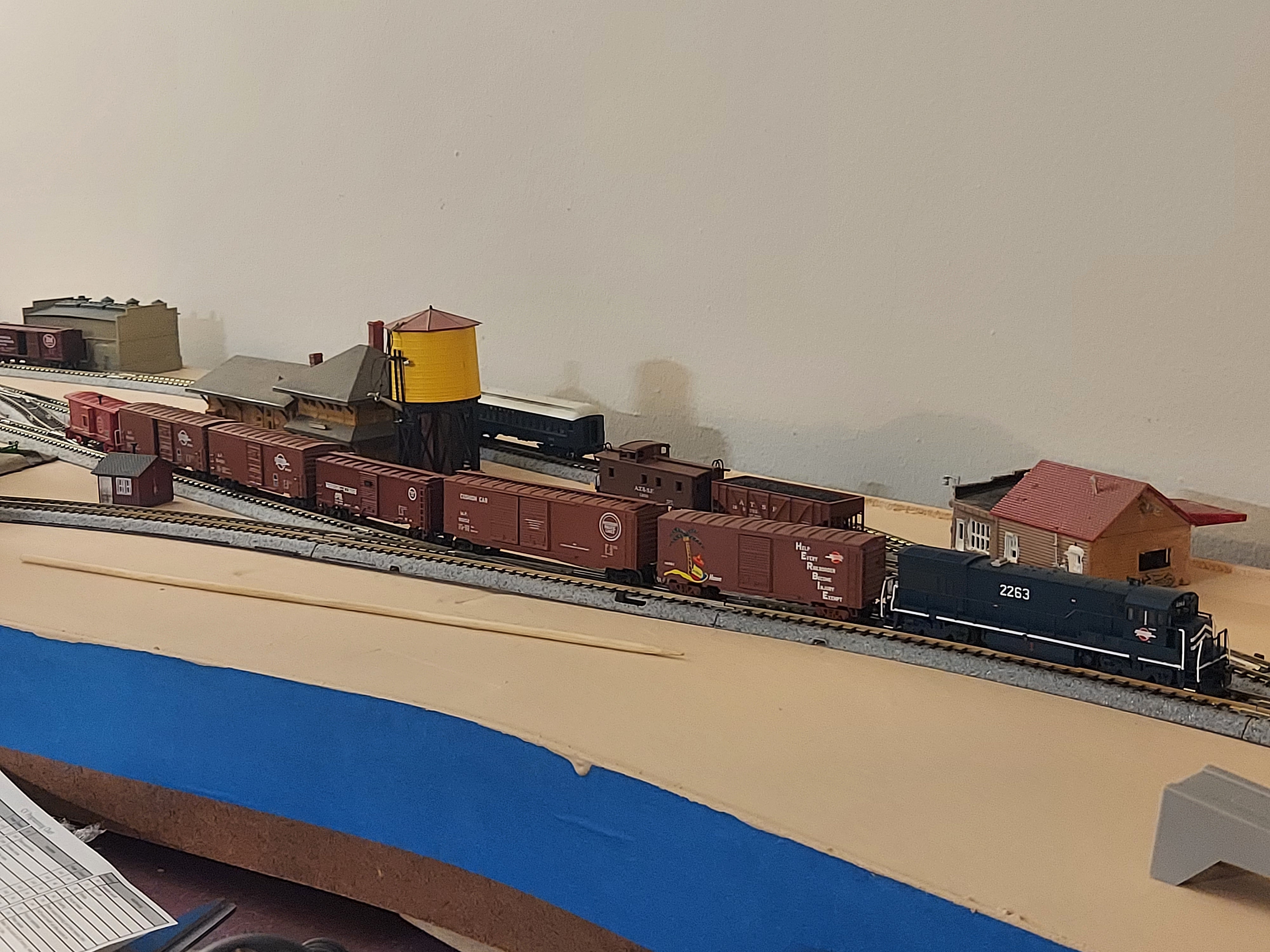
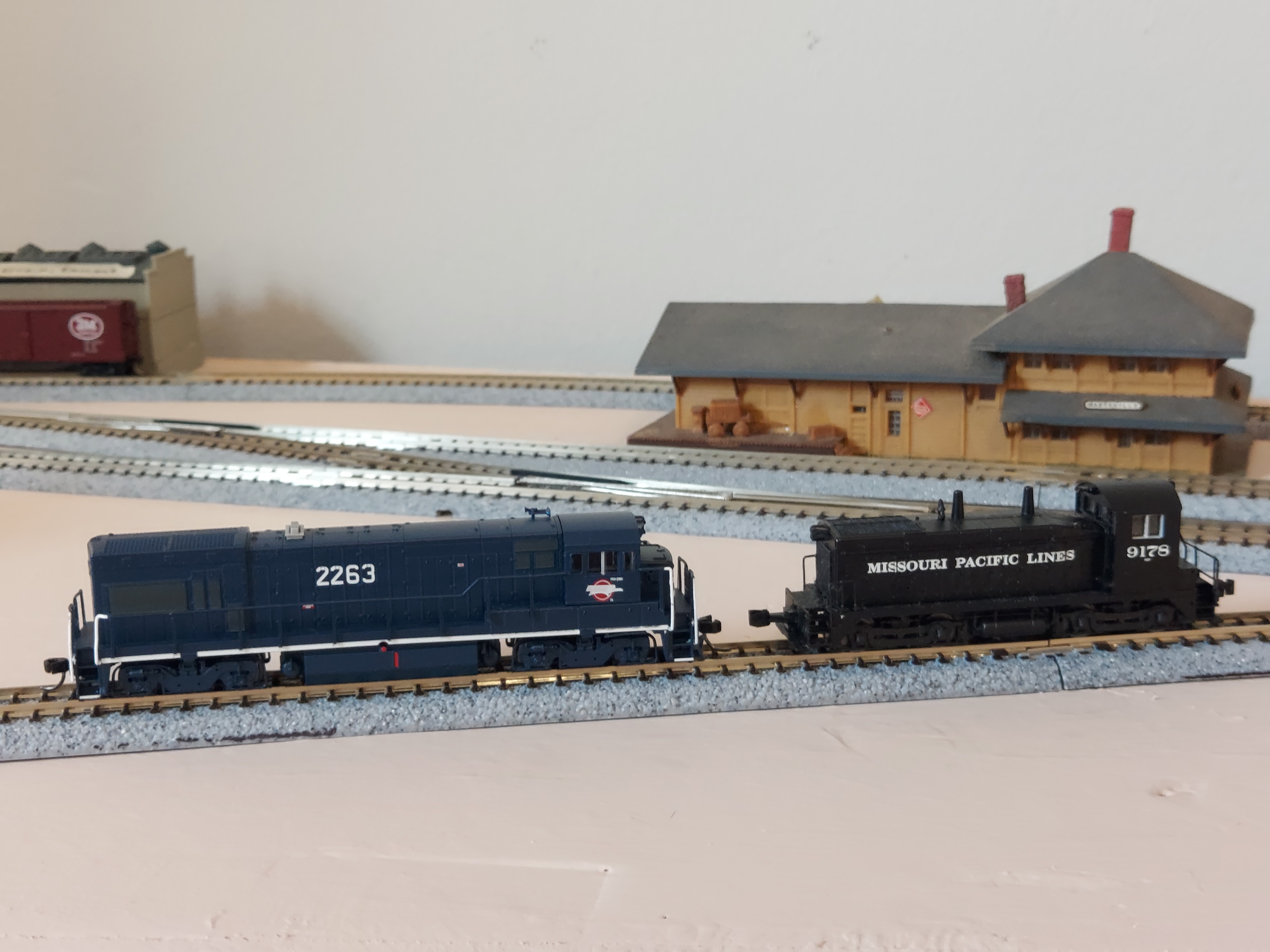
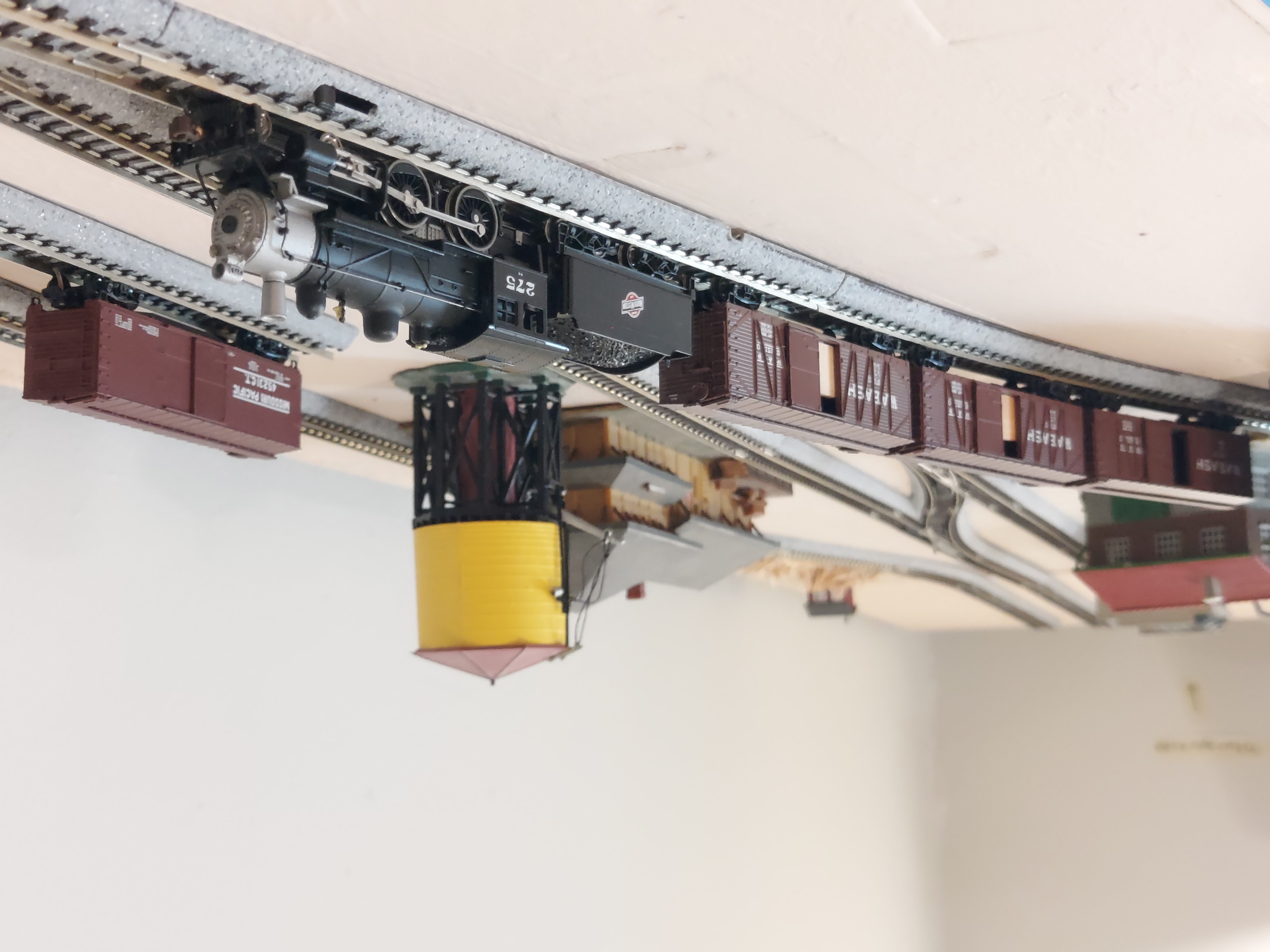
In the last post I mentioned my U-boat. Here she is in all her glory, with a box car train and with her yard helper, a Life-Like SW9 that'll need a decoder before she'll get the chance to work the yard at Fredericktown.
An update on the American, she runs much better for the most part, though she gets hung up occasionally. I put some bullfrog snot on the traction tire driver and that helped a ton.
Coming up will be some more video projects, more layout work, and hopefully my first operating session once I have another module put together. See you for the next one!
June 14, 2026
To expand or maintain?
There's nothing sexy about maintenance. Trust me, I work in maintenance on the 1:1 trains. Although there's some fun to be had in a teardown, clean, and rebuild of that new used locomotive, I have never met a modeler who wakes up excited to clean track, install couplers, or repair that damn turnout. You know which one. Just replace it already.
I find it way too easy to justify buying a new locomotive for $200+ and way too difficult to spend $20 on some much-needed components. I know why I need those powerpole connectors, sure. But I start hemming and hawing at them as soon as they're in my online shopping cart, while buying a new cut of boxcars with ease. Seriously, though, these new boxcars are super cool!
And I think that's the issue. There's a "cool factor" to buying a new tooling Missouri Pacific GE U23B by Atlas with Loksound 5 (can you guess what I just bought to pull the 1970s-era boxcars) that just doesn't hit the same as spending $200 on a real airbrush that's not from Harbor Fraught, even though I've needed an airbrush for years now.
But we need to maintain our equipment, fill out our shop tools, spend time and money on those things that allow the U-boat to cruise through town with that 60-foot cushion box (seriously, I was sleeping on this stuff as a steam modeler) or we won't get the enjoyment out of the hobby we want. I know a good many model train enthusiasts who, despite having the rolling stock to outfit a basement empire, don't have a simple loop to run it on because they keep buying those exclusive releases that are, admittedly, pretty cool and one-of-a-kind.
Maybe that fear-of-missing-out, though, is what causes us to miss out on the greatest joy in the hobby: running trains, especially through a nicely-built scenic layout. I passed up on another Atlas 1870s mogul (one of my favorite locomotives I've bought and quite rare to find at a sane price) so I could save a bit more towards filling out my materials bin. For the price, I could get all the hardware to convert one of my existing moguls to DCC with sound, with some money left over. And when I think about it, that's what I really want.
All this to say, suck it up and buy those couplers. There will be another good deal on that mogul.
Unless it's an Atlas Shay in which case drop everything and click "Buy It Now".
April 10, 2026
I've got the Unitrack bug.
Happy birthday to me! Had a birthday between this post and the last, so I picked up some Kato Unitrack to try out. What a well-thought-out system! I wish I'd started this a while ago. I'm planning on using it to play with and give myself some running opportunities while I build the Leadville layout (which will still be hand laid code 55).
Funnily enough, I just designed and printed a riser kit for Bachmann EZ track. I can adapt them easily to Kato Unitrack, too. I used these to test out ACL #836's pulling power on grades (fantastic), and tested the new MRC 4-4-0 out too (CNW #275). Well...
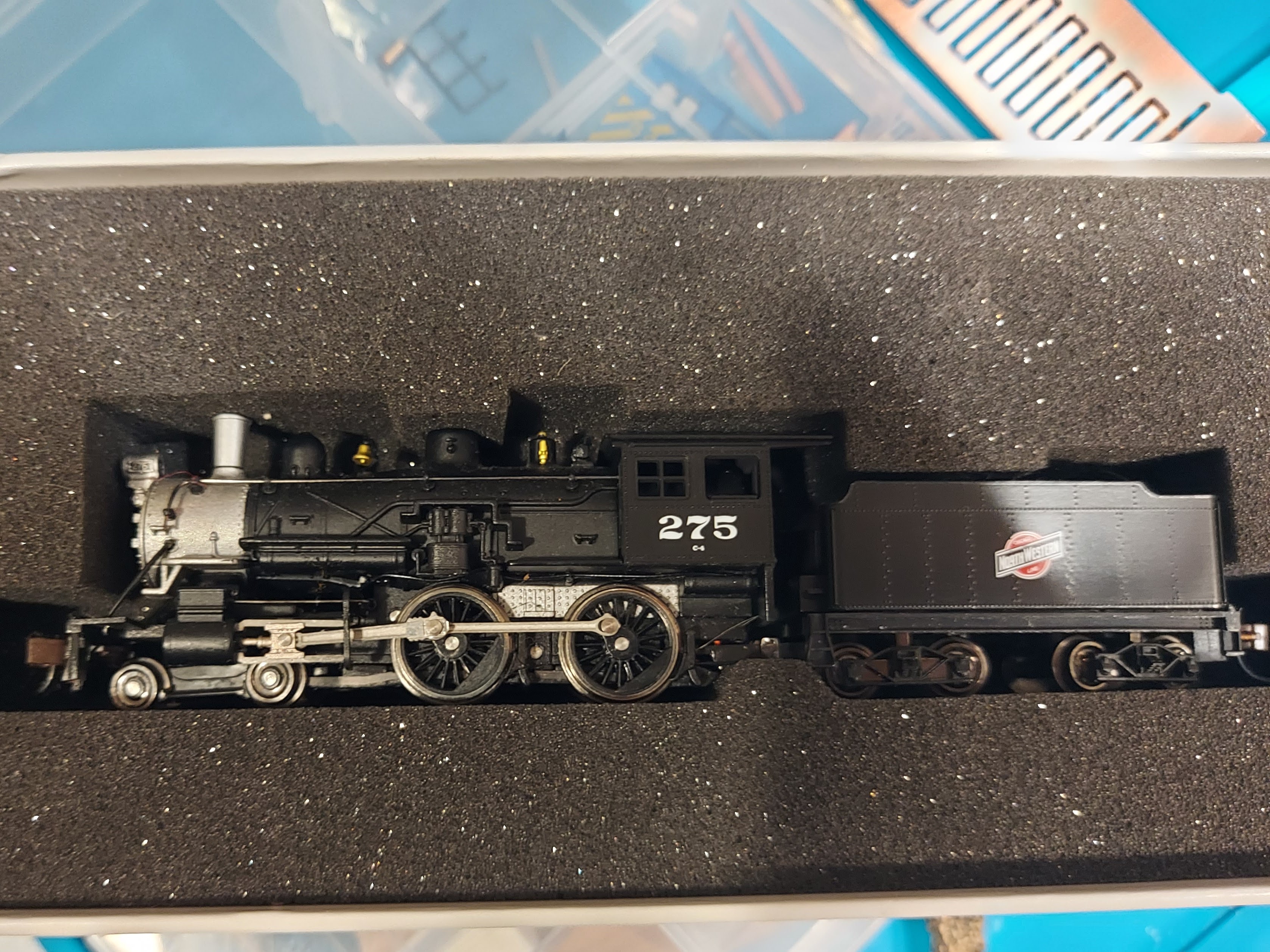
I would have to disagree with Spookshow's review for this locomotive: he gives the DCC/sound version an A. Before tuning it up with some grease and oil, as well as regauging the wheels, the locomotive would hardly stay on the track and would not respond to the throttle. The pickups were abysmal, too, before regauging. Really, you'd think this would be standard in an ostensibly new locomotive. The sound on the XL systems decoder is also not great, though the functions are pretty good for the cheap decoder (one can be had, with speaker, for about $45).
Altogether, it runs alright light, but derails on 12' radius curves when in reverse even at low speeds. The pulling power is abysmal, and I bought some Bullfrog Snot specifically for this locomotive because it should not falter with four 36' coaches on a flat track! It's going to get a Loksound 5 decoder eventually. Oh, and the tender shell wouldn't clip back in place, I had to put some kapton tape in to add a bit of pressure to refit it. No damage, just poor design.
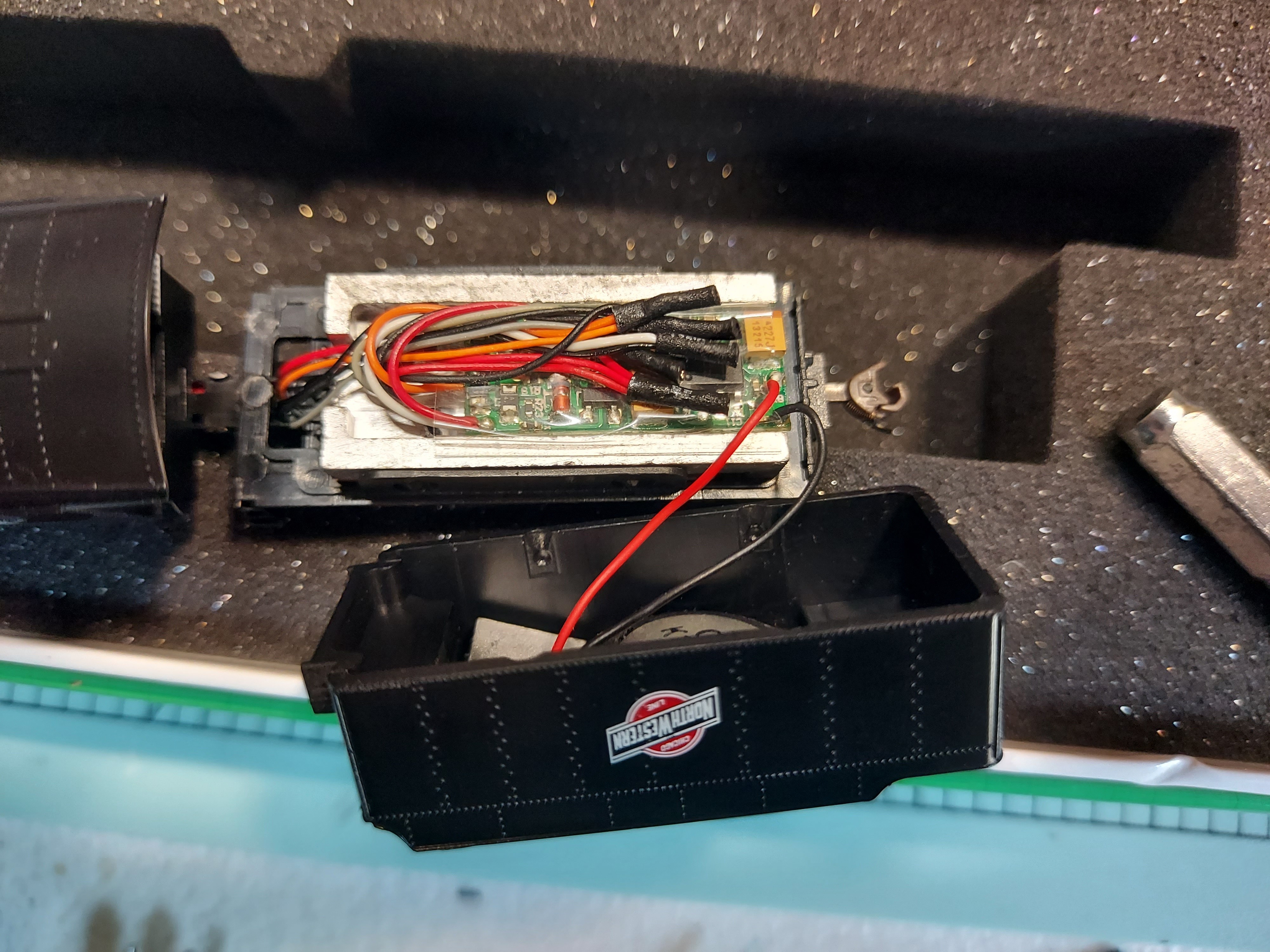
Still, I'm happy to have the locomotive and can't wait to fine-tune some more, re-decoder, reletter, and weather her. I need to finish up some decal design, though I haven't decided if she'll get the St.LL&RR logo (still being designed) or the Lead & Roses logo (featured on the site). Speaking of which, I've also started work on my classes (numbering schemes) and roster for the locomotives and other rolling stock. Very exciting work as I'm getting to plan out the history of the railroad. Go check out the new equipment page.
In case you were wondering, Broadway Limited is in fact looking for a Rolling Thunder system for me in their warehouse. It's amazing the things you can find if you ask.
Until our next meet, may your switches be lined, your semaphores high, and your fire clean!
March 22, 2026
Two blog posts in two weeks, amazing. I should get a medal.
Springfield was too much fun. ACL #836 sure seems so loud running on my test track, but when it's out on the T-Trak layout double-heading, it gets drowned out by the train show!
(Audio spliced in of course, we don't need the train show ambience.)
I've designed some benchwork for the Leadville section. Doing this all the right way. More details over there but it's going to be my summer project. It'll be a few bucks and a lot of time, so I'm making myself put a temporary hold on the roster-building.
I have a MRC 4-4-0 (DCC sound!) arriving tomorrow from Trainz. Can't wait to have dueling whistles and maybe even some speed matching. ACL 836 runs a bit fast at top speed, but otherwise has nice speed curves. It'll serve as a light passenger locomotive that can haul just about anything, although it's relegated to occasional branch line duty by the layout's main setting of the 1930s.
The D&RG old time mogul now has a Micro-Trains coupler (sorta, doesn't sit super well in the pocket) and a train of 34' Overton coaches (lettered WP&Y but soon to be StLL&RR) to pull, per my train show haul. Also picked up a pair of cabeese, one in Wabash (I seem to have a lot of Wabash for some reason, not complaining) and one in Missouri Pacific (which I also have a lot of but that's on purpose). My clubmate also talked me into his very cool PRR heavyweight set, but I'm scraping together the cash for that by next club meet. This means my Kato GG-1 will need a decoder.
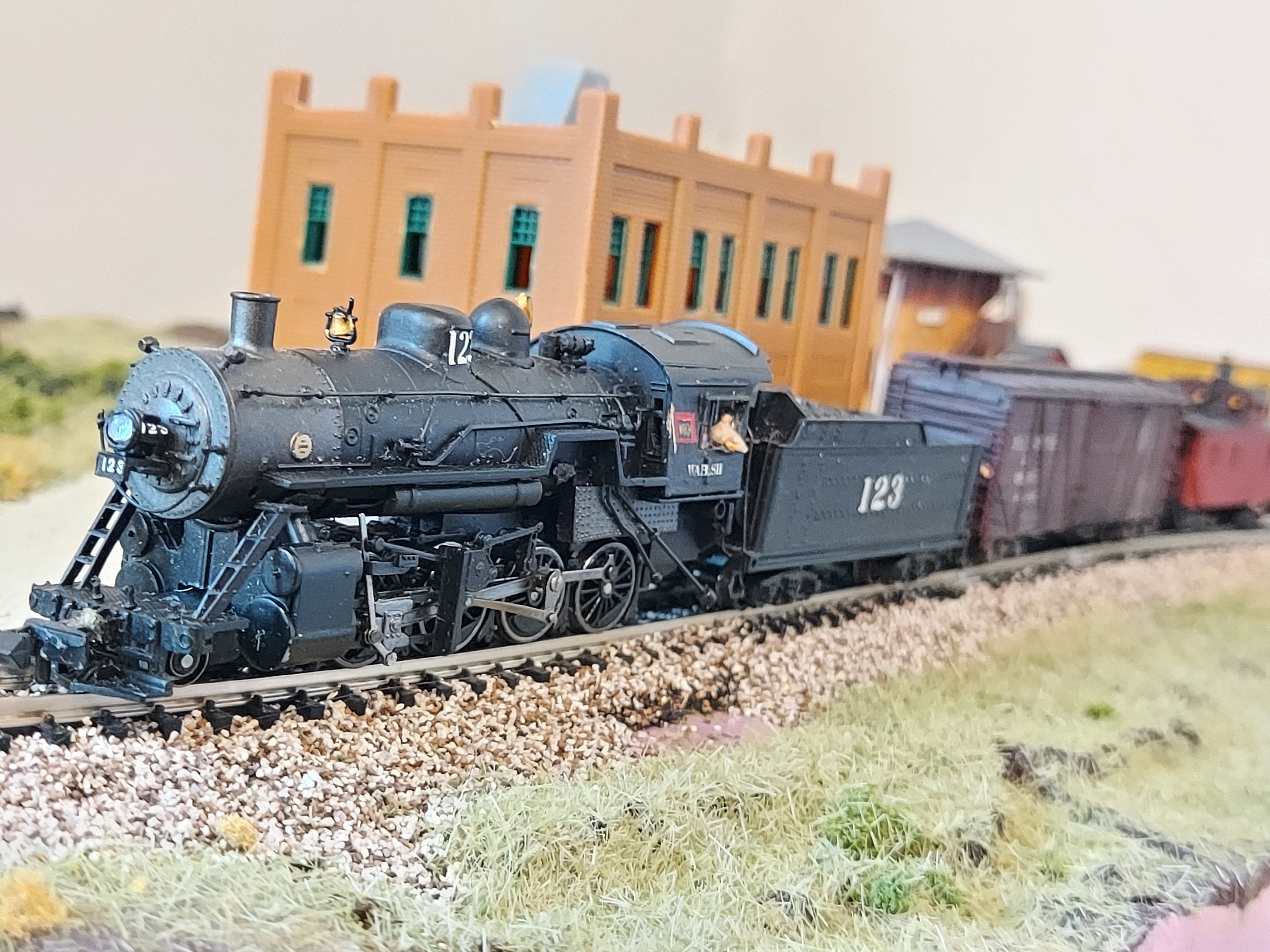
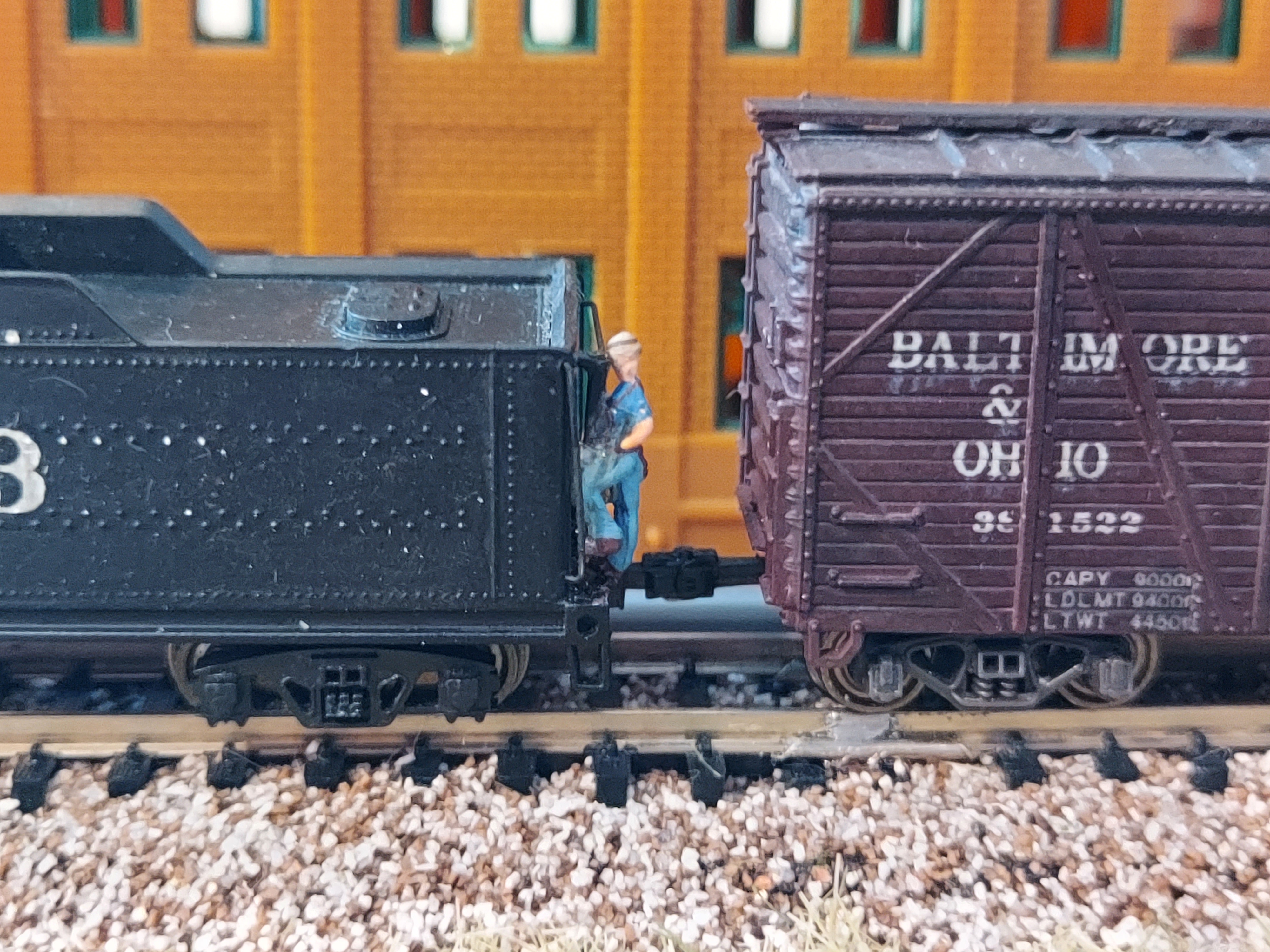
Speaking of Wabash, 123 (a consolidation) has an N-Possible coupler on the tender. I now have motive power to test them with. It was a bit of a chop job to get it on, unfortunately, but I've done worse.
The FM H-12-44 DCC conversion is going well. Got it isolated and running on DCC, but the decoder wouldn't fit with the mess of wires, so I've taken it apart and set it aside to rewire. Waiting on some parts before resuming the project. It'll have N-Possible couplers, too, bringing the conversion total to four-ish.
It would be truly great if Broadway Limited produced another run of the Rolling Thunder sound systems. In case anyone from Broadway Limited reads my blog.
See you in the next blog post!
March 13, 2026
DCC and sound comes to the Rosetta Railroad!
I've bought a BLI light mikado, ACL #836, to be relettered to one of the Rosetta Railroad's trusty mikados. I haven't done any programming on it (still on address 03 after an attempt to reprogram ended up needing a factory reset), but I enjoy it out of the box. The Paragon 4 decoder seems to work well.
The 2-6-2 DCC conversion is on indefinite hold. It was a mess of a project, and at some point I just decided it'd be better to quit rather than forge on ahead piling problems onto other problems. I'll come back around to it someday. I've since picked up the Bachmann USRA 0-6-0, essentially the 2-6-2 without pilot and trailing trucks, to fill the running niche. I like the slopeback tender quite a bit.
I picked up a Fairbanks-Morse H-12-44 a few years back at a local hobby shop. It ran decently, but I did a full teardown and cleaned every square millimeter of the wheels, axles, gears, and pickups. During this project, I realized how easily I could convert this to DCC using the decoder I already have. Just needs a slot milled for the decoder, and some isolation, and it's good to go. I'm also redoing the handrails it came with using some thin wire, instead of the bulky plastic ones that were already cracked.
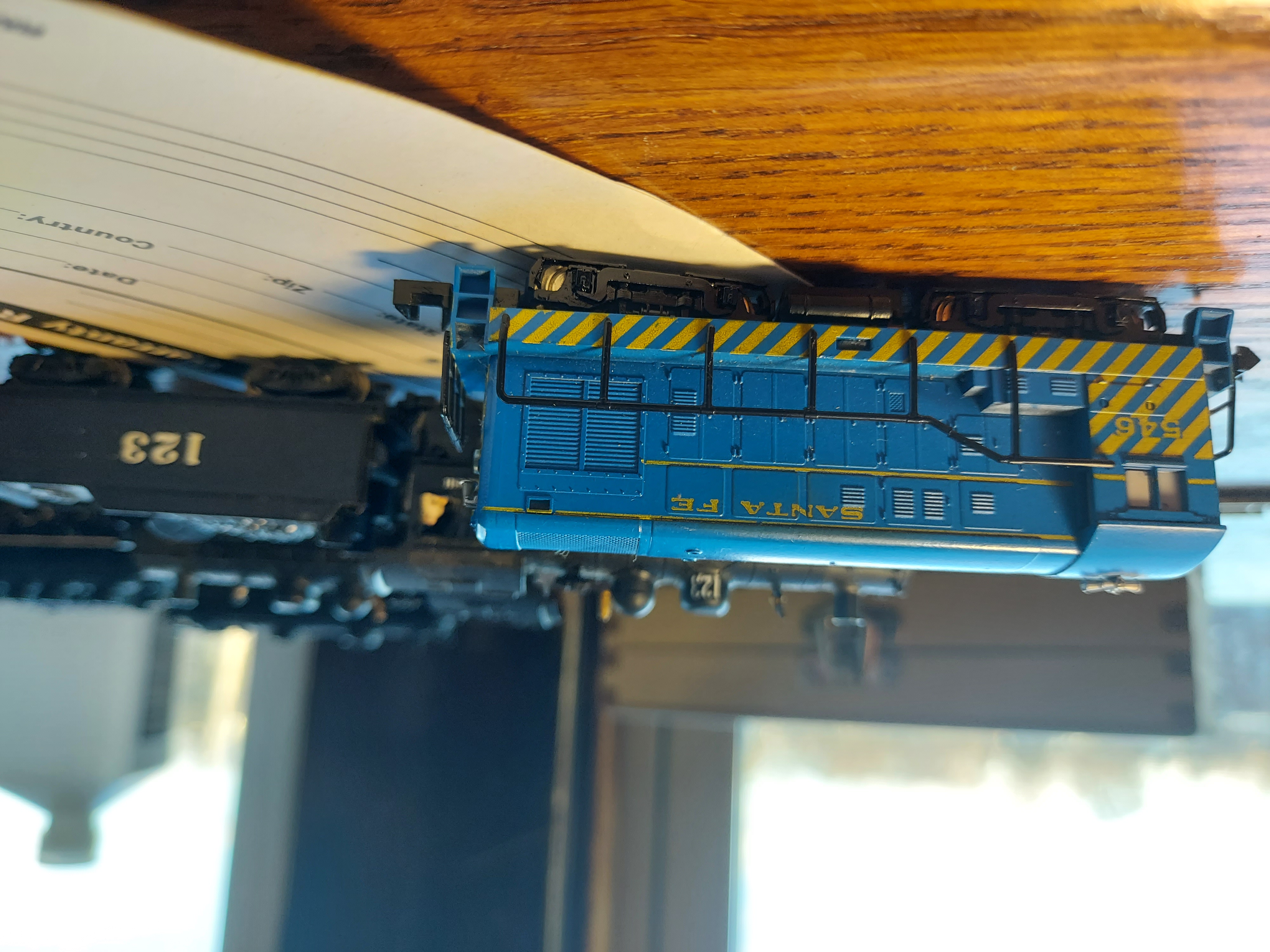
The H-12-44 in question, prior to upgrades. It's my fiancee's favorite locomotive.
As if I didn't have enough projects, I've started a couple of dioramas. One is a switching diorama and the other is stationary. Both are to test the techniques surrounding hand-laying track before I begin on the first section of the Rosetta Railroad layout: Leadville.
Speaking of which, I've put forth track plans for Leadville. It's a 5½'x6' corner section that rises up a few inches into some dramatic terrain. Track plans are featured on the Rosetta Railroad layouts page. Given the cost and unsatisfactory look of Unitrack, I've put the idea of Free-Trak-ing it on hold. It'll all be hand laid code 55, the heavier rail necessary for the laden-down ore coming from the mines. It's exciting and a bit nerve-wracking to be planning the first part of the Big Layout. With luck, I'll have this for decades to come.
Headed off to the Springfield, IL show this weekend to meet up with the T-Trak club. Here's hoping for good weather and good running!
January 9, 2026
I've still got some work left on the Piper Junction layout, but it's getting close. The last few buildings need paint, and the layout desperately needs trees. I'm also considering swapping the turnouts from Atlas plastic frogs (insulfrogs?) to something otherwise more robust, although ripping up trackwork at this stage is going to be less than fun. As well, the whole layout needs lots of little detail bits, from flora and fauna to lineside details to all the little people who will inhabit the world. It would also be nice to add telephone poles and wires, but we'll see.
N scale broad gauge is more doable than I originally thought; a 1.5 mm adjustment is a simple conversion on most older rolling stock without any modification. For the standard gauge section, I'm planning on running a pair of recently-acquired Atlas moguls (DC for now, will be converted eventually someday) as well as the two Bachmann old time ten-wheelers I pre-ordered (these come with DCC and sound). The broad gauge section will have some converted Americans; it appears rather easy to convert at least the Bachmann old time American locomotive to Nw5½, and the tender should be as simple as printing new trucks. I may design and print a new shell for the locomotive, too. The 3' narrow gauge section still remains to be determined, although this too might use a Bachmann old time American frame, as they're plentiful and cheap. The Nn3 Handbook contains a guide to convert them.
The Free-Trak Standard seems a logical choice for the 1930s Rosetta Railroad layout. It should allow great compatibility with my T-Trak club (as long as I provide connections) and give me a way to set up temporarily for home operating sessions. I came across the Free-Trak standard while looking to see if the name was taken for the standard I already wanted to develop; lo and behold, Uncommon Models had beat me to the punch! Not that I mind, as his description for the standard is better thought out than I could have devised, and I'm excited that there are already standards I can use for intercompatibility should I ever meet another Free-Trak-er.
There seems to be a shortage of N scale coupler height gauges since the Micro-Trains acquisition by Atlas. Hopefully this is just a blip in the production line; I can't see gauges going away. I need one before I continue work with my N-Possible couplers.
That's all for this post. Check back soon for more pictures added to the Trains Gallery and the Layout Page.
November 28, 2025
The new website layout is up and running! Everything should be updated through Git and VSCodium now, thanks to tutorials from Scumsuck.com and bcomnes. I've organized it a bit better, with some hierarchy, and prepared the site for its next update. Proper CSS formatting coming soon, graphic menus on the horizon.
In model railroad news, I've began a few projects towards my eventual goals.
I've purchased my first DCC system, and have begun to convert my N scale Bachmann Prairie 2-6-2 (Rosetta Railroad #TBD) to DCC using a Soundtraxx mobile decoder. I ended up with an HO scale mobile decoder, so it's been a bit of a tight fit getting it in the tender. Maybe not the best idea, but I've committed.
My micro-layout, Piper Junction Railroad, is moving along nicely in its construction. The scenery is looking pretty nice. The small 6" radius curves are challenging for most of my equipment. I'll need to fix up some of my smaller locomotives and get them running.
The decision has been made, I'm beginning tests on N-Possible couplers hoping to convert the entire fleet.
Some playing around with the idea of N scale 5'6" broad gauge.
More to come in the next blog post.