Home of the St. Louis, Leadville, & Rosetta Railroad, my model railroad layout project.
The Saint Louis, Leadville, & Rosetta Railroad is my fictional freelance model railroad. Its alt-history begins with its inception in 1866, when it was incorporated to move freight inland from the fictional Mississippi River city of Rosetta, MO and from the lead mines to the smelters in the fictional Leadville, MO, continuing up to Saint Louis. It interchanged with the Iron Mountain Railway, later the Missouri Pacific, out of Fredericktown, MO, and eventually would connect with the Mississippi River & Bonne Terre and the Cape Girardeau Northern (later the Frisco/BNSF) in Ste. Genevieve and Cape Girardeau.
The line was expanded in the late 1880s, saw its heyday from the recovery of the Panic of 1893 to the Stock Crash in 1929, and surivived the Great Depression. Nearly succumbing to the strain, the Rosetta Railroad lasted just long enough to become vital to the war effort, as the US Military demanded the products of Missouri's Lead Belt. The railroad came out of receivership in 1948, in time to be purchased by the Missouri Pacific to participate in mining out the Old Lead Belt. The Rosetta Railroad continued to run its own corporate structure, dieselized slowly, and was abandoned in 1973 along with the Belmont Branch.
The Friends of the Rosetta Railroad revived the line in 1976 after a bicentennial tour of L&RR #29. It operated primarily as a tourist railroad, with some revenue freight on the line and continues operations today.
Note: the 1870s layout will largely be separate modules due to the large differences in scenery and track plans.
I'm freelancing not only the railroad, but also the county, and several of the cities and towns. I've visited the real world Ste. Genevieve and Fredericktown so far, and would like to visit more places along the fictional route to experience the places along the fictional line.
Read more on the History page.
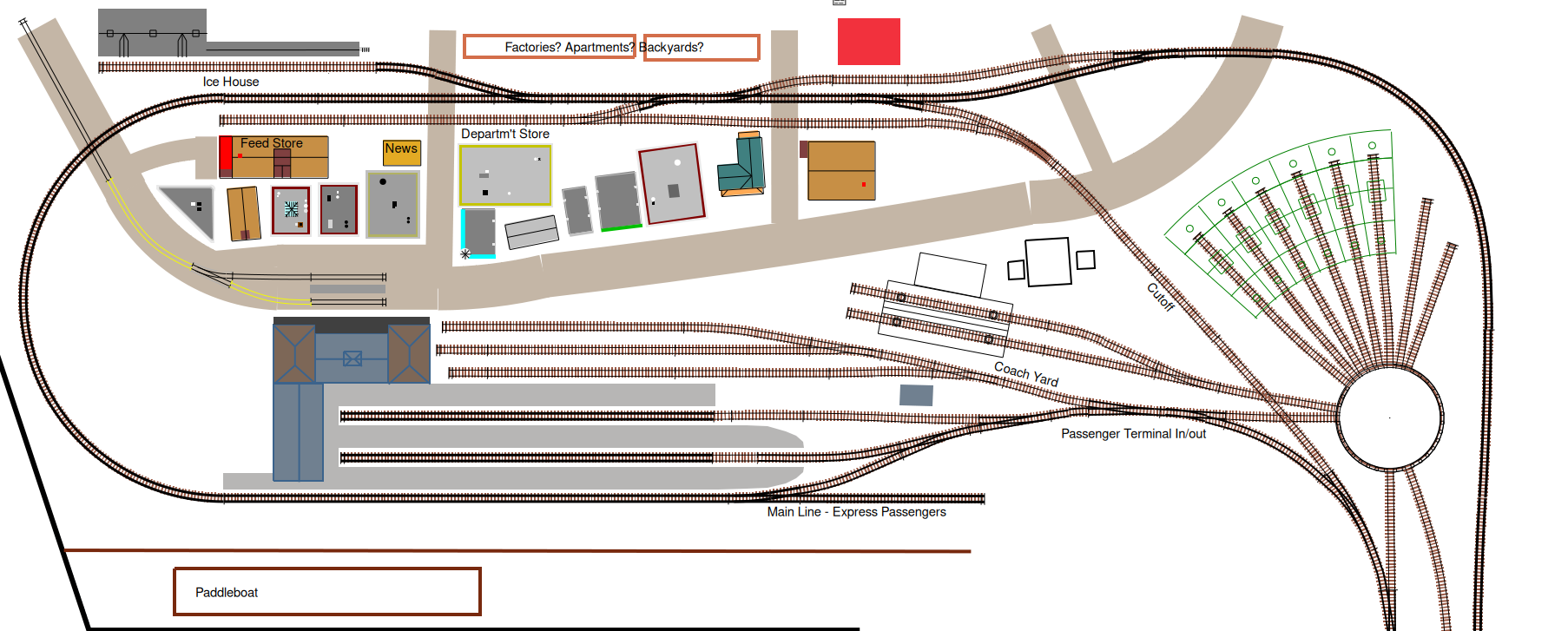
An early design for Rosetta, I abandoned this as the resin printer filled the space intended for the city. Rosetta deserves a bit more space to be modeled, anyways, and my skills in track planning have grown, but I still like many elements of this plan and some ideas will be recycled into the future Rosetta section.
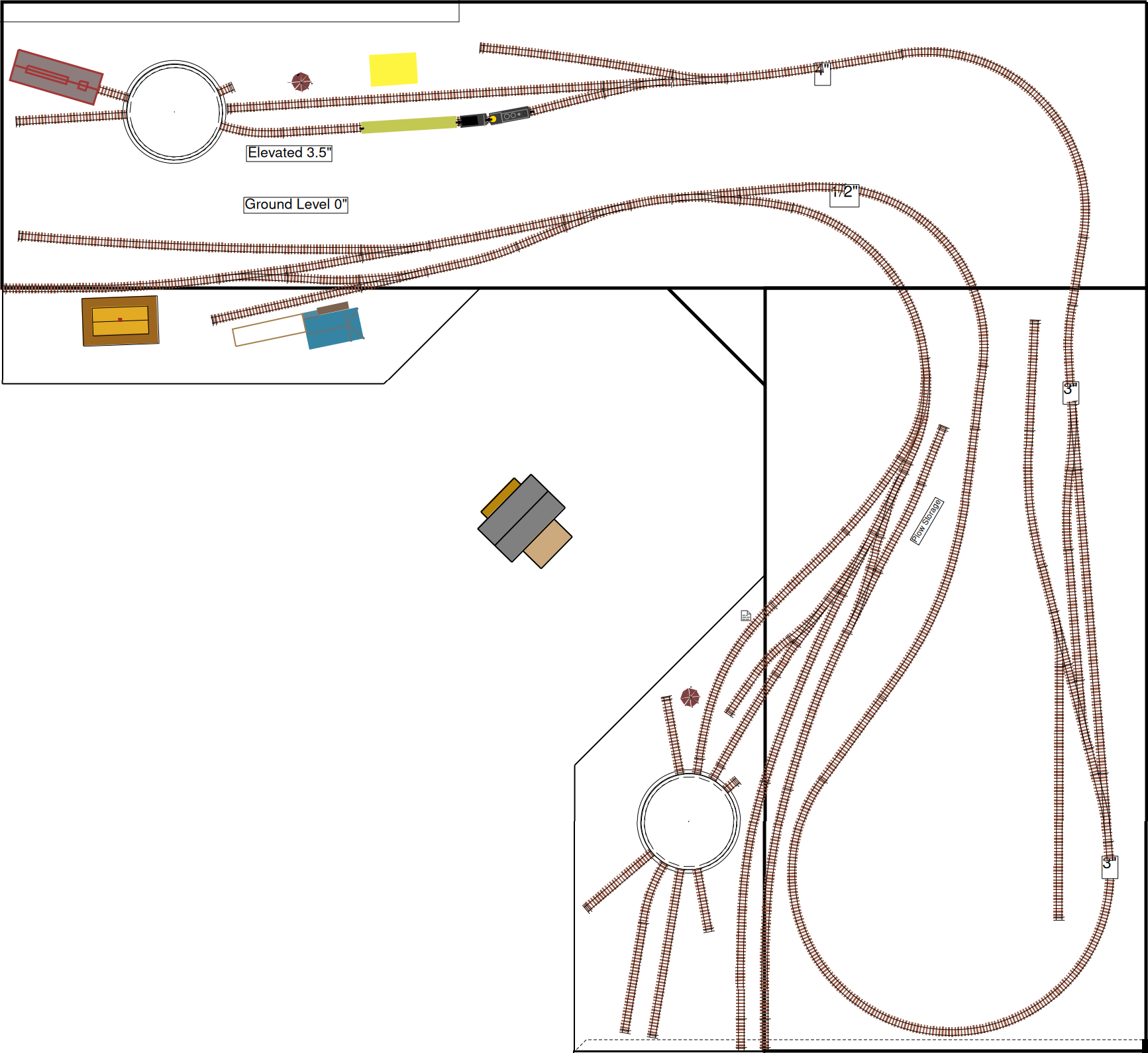
Originally, I'd designed this as an unrelated Colorado mountain layout, but realized it would make an excellent Leadville, MO, a ficional location on the railroad's main line. Trains go up the grade from the mainline junction in Leadville, around the horseshoe curve, and stop for water at the old ore crusher in Chalmers. Continuing on, the trains cross a cliff escarpment over a waterfall, then roll into Mine No. 1, where the train is watered, turned, and run around, ready to come back down the mountain.
The Leadville branch was built in 1899 to Mine No. 3, and extended in 1915 to the existing Mine No. 4. Naturally, it shouldn't have survived the drying up of Mine No. 4 in the late 1940s, but the postwar drop in scrap and commodity prices resulted in the tracks sitting and rusting, forgotten by all but the townsfolk of Leadville. The last train left Mine No. 4 in 1947, carrying a load of equipment sold to Doe Run Corporation. Railfans managed to capture footage of this event.
The turntable up at the mine is a rare survivor, too. Most small turntables fell derelict and were removed and filled in, but the Chalmers Mine turntable proved useful for turning the small locomotives needed to navigate the sharp curves up to the mine. In the modern day, passenger excursions run up to Leadville to see the historic mine site and mill, lovingly restored by the Chalmers Mine Historic Foundation. The turntable is operated occasionally on steam days with the lighter locomotives, while the diesels and heavier steam engines tend to run around the trains.
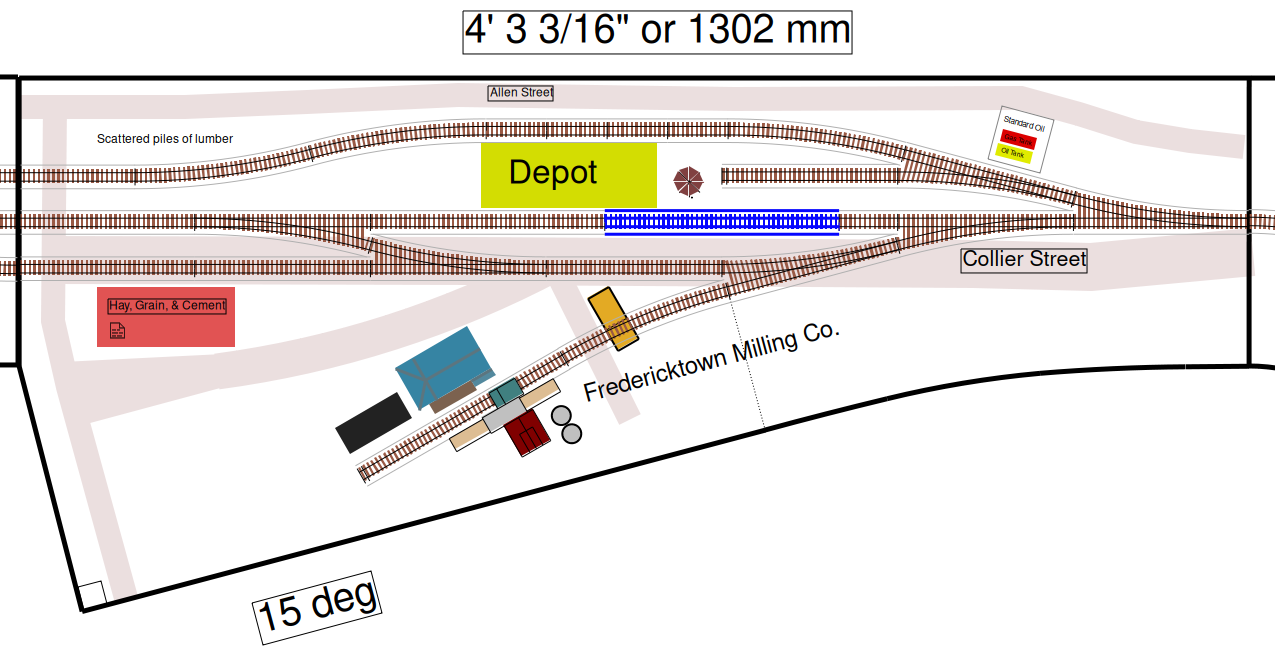
After testing the Leadville branch, it needs a bit more space to get the proper curves and grades I want. Instead, I'm modeling Fredericktown, a real town (which also happens to be nice and flat). It's a Free-Trak module, based off a standard by Uncommon Models.
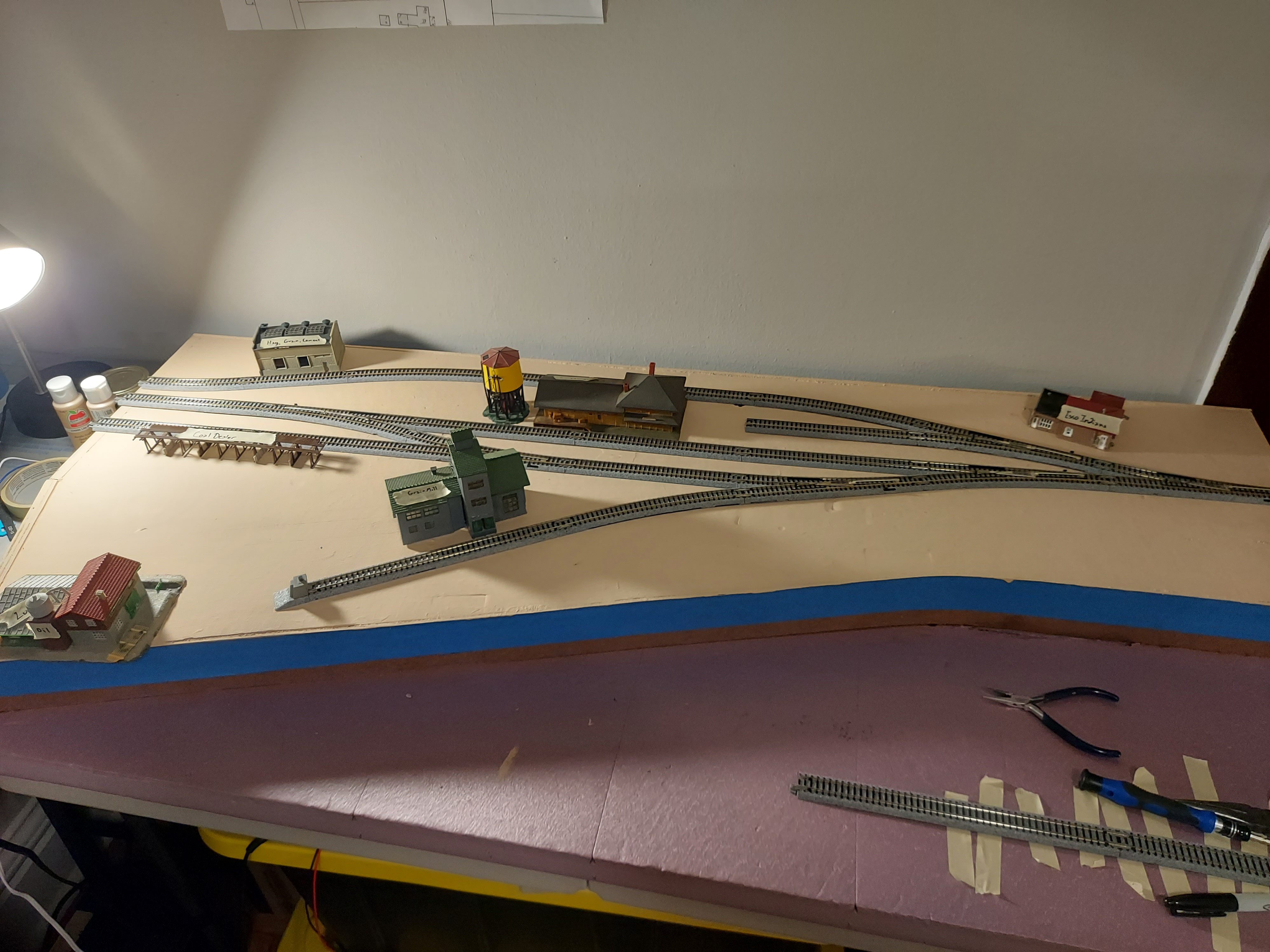
I've taken inspiration for the trackplan from this 1914 Sanborn Fire Insurance map.
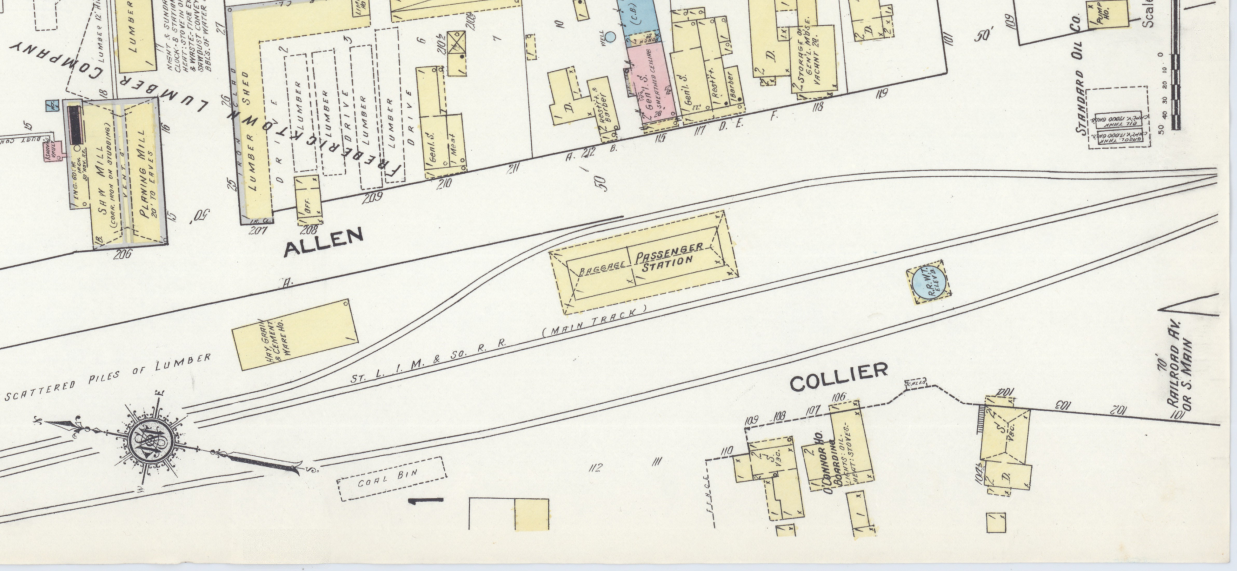
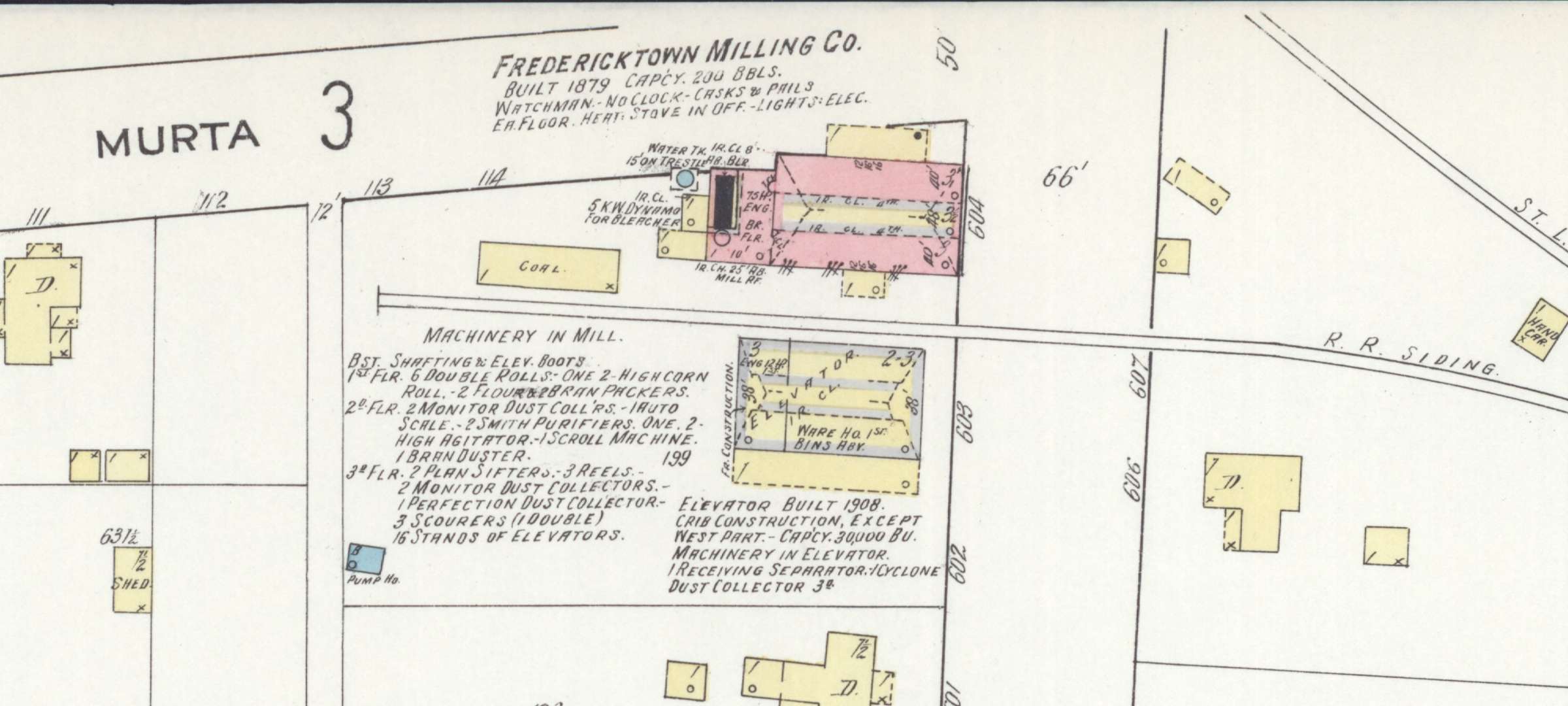
Though the trackage changed by the 1927 Sanborn Map, I'm keeping the 1914 trackplan for that fun sweep up-and-around the old depot (the second depot built in Fredericktown). The third, extant depot will be a scratchbuild on a smaller module to the east. The extra trackage would make more sense to adapt a real-life through station to what my freelance turns into an interchange.
The St. Louis Rail Prototype Modeler's meet lit a fire under me! I wanted to display the Fredericktown module, but didn't like the idea of it going with bare beige board, so I put up some temporary scenery. I think it was sufficient.
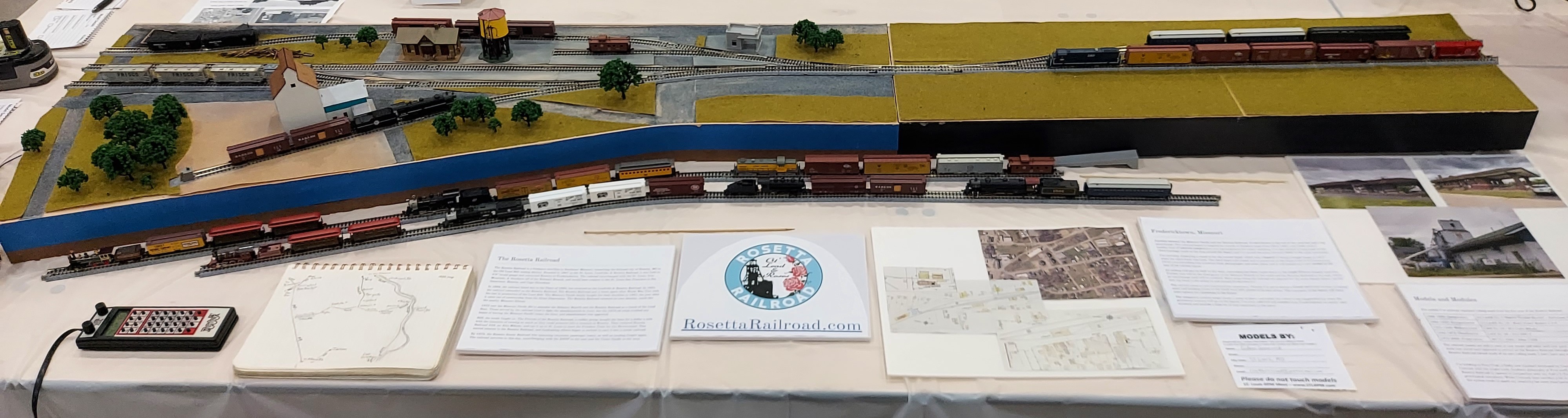
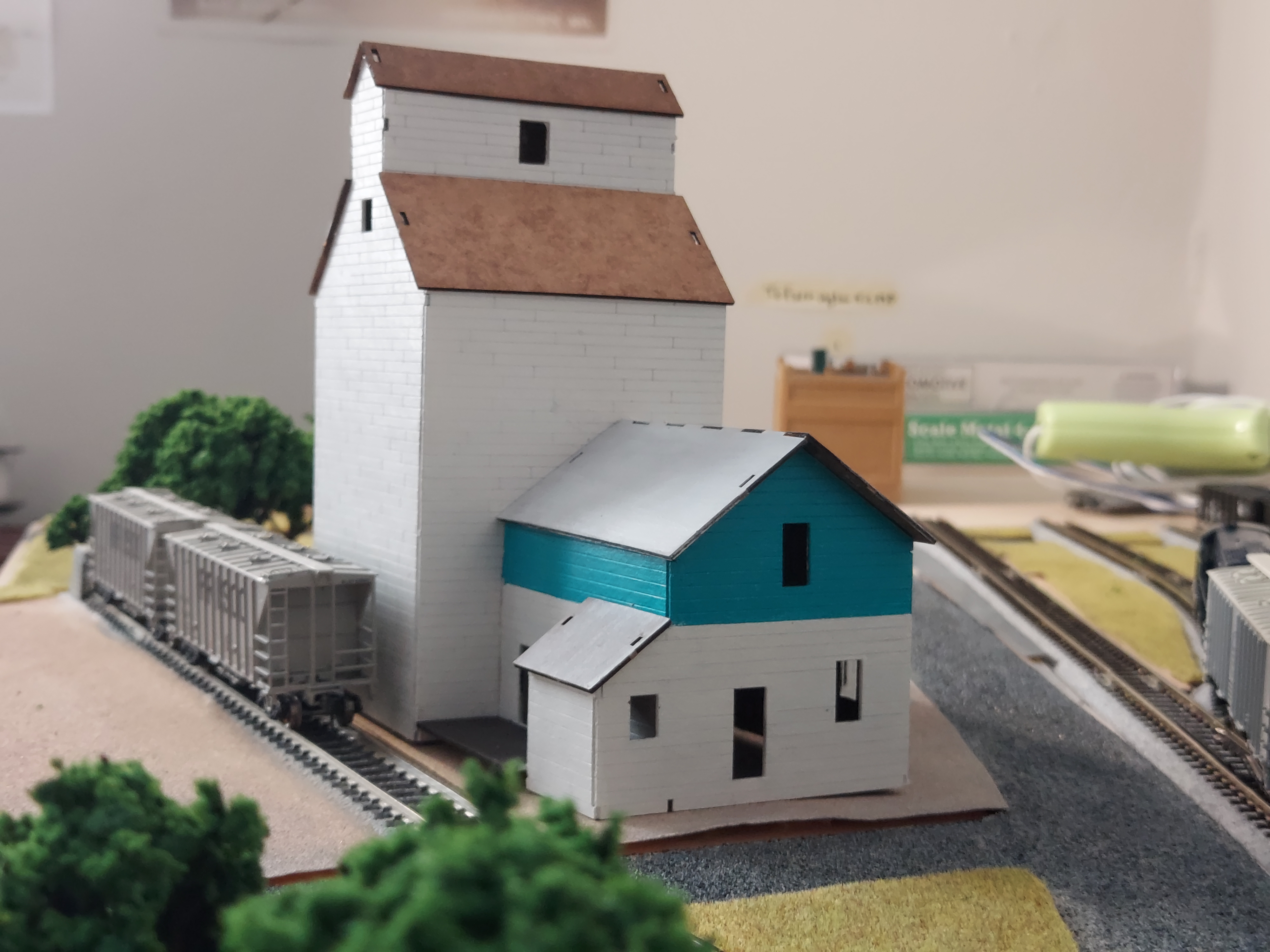
I also kitbashed the grain elevator and feed store from Miata Mike's kits on Ebay. It's still a work in progress, but I think it captures the idea of the place. Overall, the module is starting to feel like a real place.
More photos on the Summer 2026 Gallery.